Libraries
Public Libraries and the Reading Room
The room came first, and the borrowing came later.

Textbooks
From the master's single copy to a book in every pupil's hands.
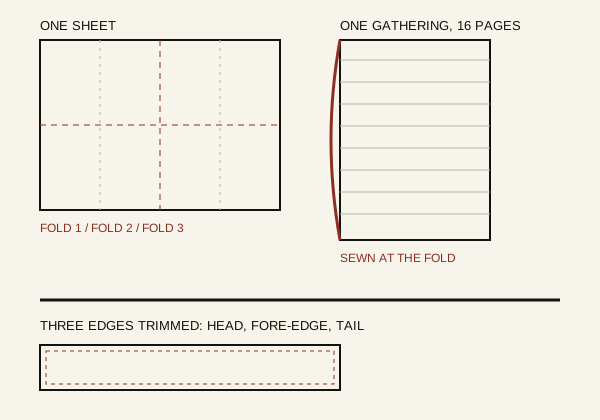
For most of the history of formal teaching, the book belonged to the teacher. A school might hold one copy of a grammar or a psalter, and the lesson was the process of getting the contents of that copy into thirty heads by voice and repetition. Pupils copied, recited and were corrected. The book was a master text, not a personal possession, and the idea that every child in a room might turn to the same page at the same moment would have seemed extravagant.
What changed that was not a single invention but a slow alignment of three things: a cheaper sheet, a stable text and an institution large enough to order in quantity.
Printing lowered the cost of a copy, but not immediately to the level of a classroom. The expensive part of a book has usually been the paper, not the impression, and paper made from rag stock remained a limited commodity. The nineteenth-century shift to wood-pulp paper and to machine production changed the arithmetic. A publisher could now think in editions of tens of thousands rather than hundreds, and could set a price that a school board rather than a wealthy family might pay.
Libraries
The room came first, and the borrowing came later.
Digital Reading
A zipped folder of web pages, an ordered list, and no page numbers at all.
Libraries
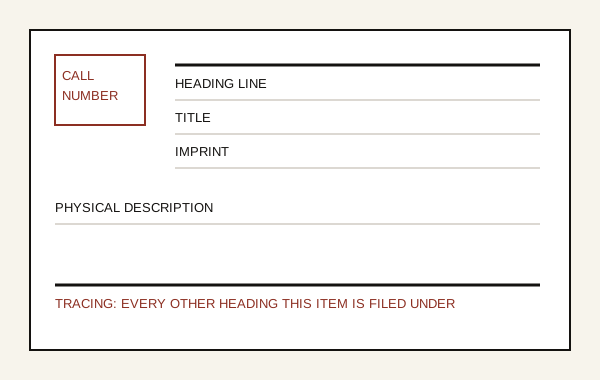
A card of a few lines that had to answer three different questions.
How the book that a class works from is chosen, printed, priced and replaced.
Textbooks
From the master's single copy to a book in every pupil's hands.
Textbooks
One leaf, one board, and the whole of a child's first year of reading.
Textbooks
When a book stopped being one book and became a number in a sequence.
Reading rooms, catalogues and the long argument about who a collection is for.
Libraries
The room came first, and the borrowing came later.
Libraries
A card of a few lines that had to answer three different questions.
Libraries
The notes in a used book are a record of how it was actually taught.
Files, formats and scanning: what changes when the page stops being paper.
Digital Reading
A zipped folder of web pages, an ordered list, and no page numbers at all.
Digital Reading
Two generations of copying, and the same unresolved question about text.
Digital Reading
A licence solves the copying problem and leaves the harder problems standing.
Reading aloud, cheap editions and the lists that decide what gets read.
Literacy
Listening to a text is older than reading one silently, and it never stopped.
Literacy
Every list is an argument about a subject, whether or not it admits it.
Literacy
Lowering the price of a book changed who read, and changed what was published.
Comment
A List Is Never Only a List
It is easy to treat a reading list as housekeeping: a set of titles typed once and reissued each year with the dates changed. It is nothing of the sort. A list states what a subject is made of, what order its parts should be met in, and what a person who knows the subject is assumed to have read. Nobody who has argued about one has ever really been arguing about a book.
That is why the practical improvements matter more than the disputes. Say which items are to be worked through and which are to be sampled. Say what each is good for in one line. Check that every title can actually be obtained, in a form that can be enlarged, heard or borrowed. Name the edition where the pagination is going to matter. None of this settles the argument about what belongs, and all of it makes the argument honest, because a list whose items cannot be reached is not a claim about reading at all.
Education Revolutionaries