The School Library Catalogue
A card of a few lines that had to answer three different questions.

Department front
Reading rooms, catalogues and the long argument about who a collection is for.
Lead article
The room came first, and the borrowing came later.
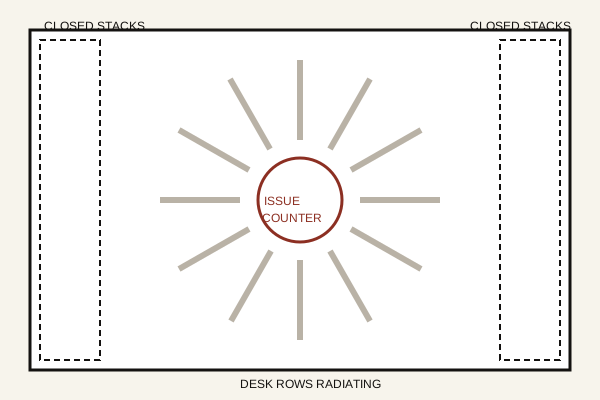
A public library is now understood mainly as a place that lends. Historically the lending was the late addition. The older institution is the reading room: a heated, lit, quiet space with tables, in which a collection that could not be taken away was consulted on the premises.
The reasons are physical before they are cultural. Books were expensive enough that a collection could not risk dispersal, and reading requires conditions that many homes did not supply: light after dark, warmth in winter, a flat surface, and enough quiet to hold a paragraph in mind. A reading room provided those conditions at shared cost. For a very long time the most valuable thing a library gave a reader was not the book but the two hours in which reading was possible at all.
The architecture followed the requirement directly. Reading rooms were built tall for daylight and for air, with desks arranged for supervision and for the shortest path to an issue counter. Where the plan radiates from a central desk, that is not symbolism; it is an attendant minimising walking distance while keeping every table in view.
A card of a few lines that had to answer three different questions.
The notes in a used book are a record of how it was actually taught.